Hit a plateau on your GLP-1? What counts as a stall and what to try
The short answer
A true plateau is when weight loss has clearly slowed, often to under about 1% of body weight over 4 to 8 weeks, while you stick with your plan. A week or two of no change is common.3 Weight loss also levels off late in the big trials.12 Check protein, portions, drinks, strength training and sleep, and leave dose questions to your prescriber.
Is it normal for weight loss to level off on a GLP-1?
Yes. Leveling off shows up in the big trials. It does not mean you did something wrong.
In STEP 1, adults taking semaglutide (the medicine in Wegovy) began losing weight at the first check, at week 4. Their average weight hit its lowest point at week 60 of the 68-week trial, and the chart in the paper flattens toward the end.1 In SURMOUNT-1, adults taking tirzepatide (the medicine in Zepbound) were followed for 72 weeks. The authors wrote that the trial was long enough for the lowest-dose group to reach a weight plateau and for the two higher-dose groups to come close to one.2
On average, people lost about 15% of body weight at 68 weeks in STEP 1, and 15% to 21% at 72 weeks in SURMOUNT-1, depending on the group.12 Some people lose more and some lose less.
Why does the curve flatten? A 2011 modeling study in The Lancet found that the body's response to eating less is slow and levels out toward a new steady weight. The model includes the way the body's energy use adapts as weight falls.9 One obesity specialist in a 2026 Medscape panel described the flat end of the trial curves as the medicine reaching its limit while the body adapts, not as a failure of treatment. A person who levels off more than a year in, on the top dose, the specialist said, has arrived at their result rather than fallen short of it.3
What counts as a real stall, and what is just a bad week?
Weight does not fall in a straight line. One specialist in the Medscape panel said a two-week stall is nothing to panic about, because weight loss is rarely linear. Another pointed out that the scale moves with fluid and stored carbohydrate, things that have nothing to do with how well the medicine is working.3
There is no official medical definition of a stall. Medscape asked five obesity medicine specialists about plateaus, and their rules of thumb differed in the details, from as short as 2 to 4 weeks to as long as 6 to 8 weeks. Most put a stall at weight loss slowing to under about 1% of body weight over roughly 4 to 8 weeks, while the person is sticking with the plan. For someone who weighs 200 pounds, 1% is 2 pounds.3
So a stall is not one stubborn morning. It is a slow trend across a month or more, so look at the line across several weeks, not one reading.
Specialists in the panel also said returning hunger can matter as much as the scale. If food thoughts are getting louder, tell your prescriber even if your weight looks fine.3
What should I check first when the scale stops moving?
Start with the basics that are in your hands.
| What to check | Why it matters | What to try |
|---|---|---|
| Protein | Experts suggest 1.2 to 1.6 g per kg of body weight a day during active weight loss. Low appetite makes it easy to fall short.4 | Start each plate with the protein. Check your number in the protein guide. |
| Portions and snacking | Specialists in the Medscape panel named returning hunger, slightly bigger portions and grazing as things to look at.3 The 2025 advisory lists large meals and mindless or nighttime eating among habits to minimize.4 | Write down what you eat for a week. Aim for regular, smaller meals and notice nighttime eating. |
| Drinks | In a small 4-week study of 15 adults, about 450 calories a day from soda did not make people eat less of other food, and their weight rose. The same calories from jelly beans were offset by eating less, and weight did not rise.8 | Check sweet coffee drinks, juice, soda, smoothies and alcohol. The advisory lists sugary drinks to minimize and suggests minimal alcohol.4 |
| Strength training and activity | The advisory suggests strength training at least 3 times a week plus at least 150 minutes a week of moderate aerobic activity.4 | Start with two short sessions a week and build up. Chair squats, wall push-ups and bands count. Ask your clinician what is safe. |
| Sleep | The advisory notes that poor sleep is linked to more hunger and weight gain, which can reduce some benefits of a GLP-1.4 | Keep a steady bedtime. If sleep is poor, mention it to your clinician. |
| Things for your prescriber | One specialist said most plateaus they see trace back to missed doses, injection or storage problems, medicines that can add weight, hidden alcohol or grazing, or a condition like untreated sleep apnea or an underactive thyroid.3 | Tell your prescriber about the stall. Do not change or stop any medicine on your own. |
Protein is the easiest of these to fix, and the first to slip when you are barely hungry. The calculator below does the math.
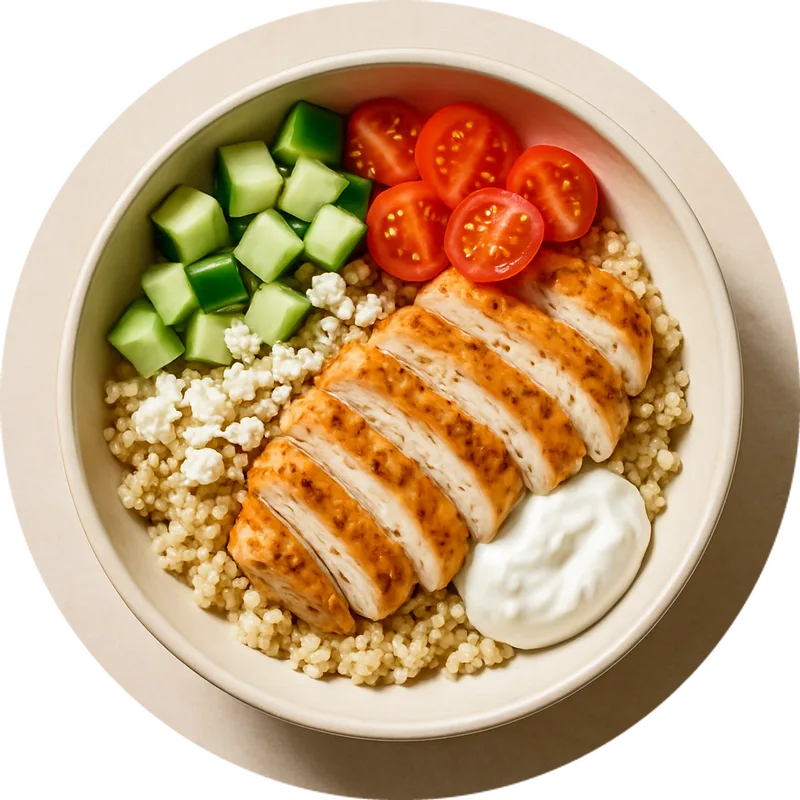
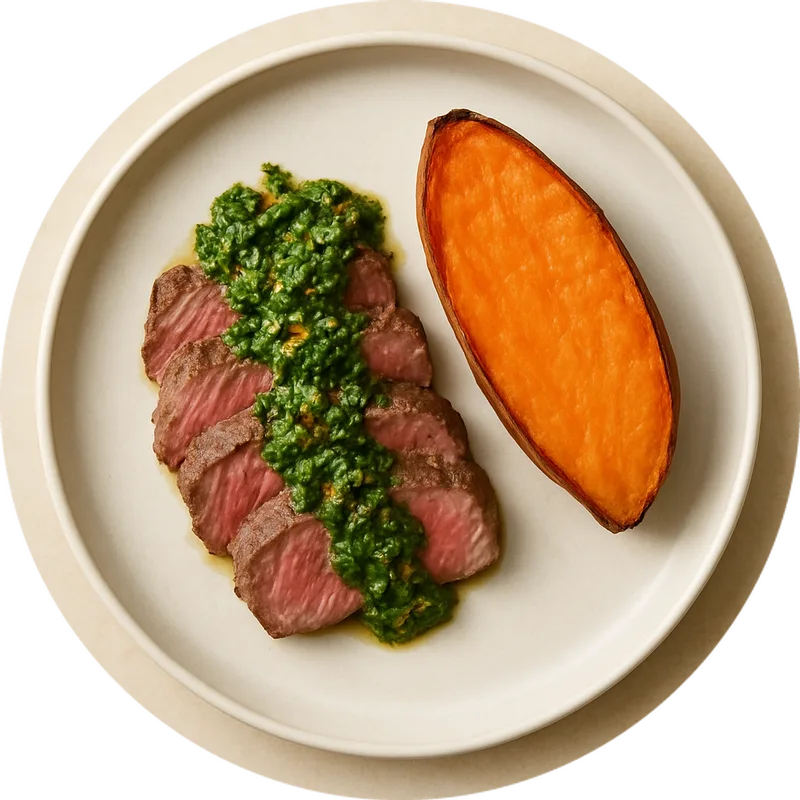
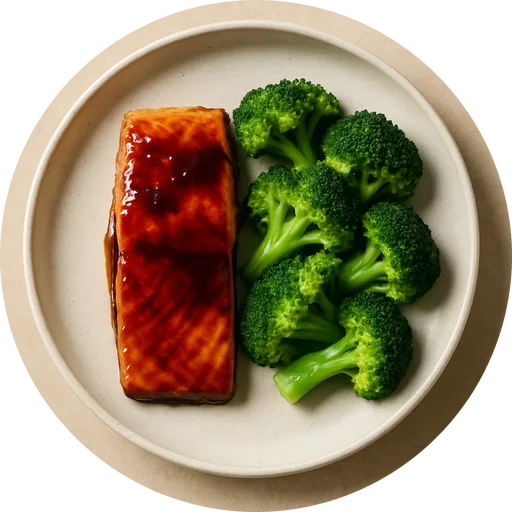
If you want ideas, here are three high-protein plates from the Post Dose recipe library. Each one has 33 to 52 grams of protein and comes in under 380 calories.

Turkey Sausage & Sweet Potato Hash

White Bean & Rosemary Chicken Soup

Cheesy Chicken & Zucchini Skillet
Do not try to force the scale down by eating much less. The advisory notes that how much lean mass you lose depends on how deep the calorie cut is, how fast the weight comes off, and whether you do strength training.4 Muscle is what you are trying to keep. More in the muscle loss guide.
Can the scale stall while my body keeps changing?
Yes. Weight is one number, and it cannot tell fat from muscle or water.
In a 3-month trial of 52 men with obesity, one group exercised without losing any weight. Their scale did not move, yet their belly fat and the deep fat around their organs went down.7 That study did not involve a GLP-1, and it only included men. It shows why the scale is not the whole story.
On a GLP-1, the advisory describes a randomized trial in which a year of the medicine plus exercise training preserved bone density and cut more belly fat than the medicine alone.4 It also reports that in STEP 1, about 38% of the weight lost was lean mass, which includes muscle.4 That is why strength training matters even when the scale is quiet.
Trials like STEP 1 tracked waist size as well as weight.1 You can too. Measure your waist every couple of weeks, and notice how your clothes fit and whether stairs feel easier.
Who decides about dose changes?
Your prescriber does. That call depends on your health history, side effects and how you have responded, which an article cannot judge. Do not change your dose or injection timing on your own.
What you can do is walk into the visit with a clear picture. The specialists in the Medscape panel said they weigh the trend over time, side effects, hunger and other health markers, not the scale alone.3 Bring:
- Your weight trend over several weeks, not one day.
- What a normal day of eating looks like, including protein and drinks.
- Any side effects, and any change in hunger or food thoughts.
- Your sleep, stress level and any new medicines.
What happens if I stop the medicine because I plateaued?
A plateau by itself does not mean the medicine has stopped working. Two trials that studied stopping show why.
In STEP 4, adults first took semaglutide for 20 weeks. The 803 who made it through that stretch had lost 10.6% of their body weight on average. They were then split into two groups. Those who kept taking semaglutide lost another 7.9% by week 68. Those switched to placebo regained 6.9%.5
In SURMOUNT-4, adults first took tirzepatide for 36 weeks. The 670 who made it through that stretch had lost 20.9% on average. After that, the people who kept taking it lost another 5.5% by week 88. The people switched to placebo regained 14.0%. At week 88, 89.5% of those who continued had kept at least 80% of their earlier loss, compared with 16.6% of those on placebo.6
Both groups in each trial also got diet and activity support, so the regain happened even with that support.56 Whether to continue, lower or stop a medicine is a decision to make with your prescriber.
The bottom line
Leveling off is part of how weight loss on a GLP-1 looks in the trials. A true stall is a slow trend, often under about 1% of body weight over 4 to 8 weeks, not a rough week. Check protein, portions, drinks, strength training and sleep, track more than the scale, and bring your numbers to your prescriber. Post Dose builds its meal plans around a protein target, which takes one check off your list.
Questions people ask
How long does a GLP-1 plateau last?
There is no official length. Most specialists in a 2026 Medscape panel start to call it a stall when loss has slowed to under about 1% of body weight over roughly 4 to 8 weeks, and one said a two-week stall is nothing to panic about.3 If you are past that point, tell your prescriber and run through the checklist above.
Does a plateau mean my GLP-1 stopped working?
Not necessarily. In STEP 1 and SURMOUNT-1, average weight loss slowed and flattened late in the trial, which is part of how these medicines look in studies.12 The stopping trials show the medicine is still doing work at that point: people who switched to placebo regained weight.56 Whether to change or stop treatment is a decision for you and your prescriber.
Should I eat less to break a plateau?
Cutting calories harder can cost you muscle. The 2025 advisory notes that lean mass loss is affected by how deep the calorie cut is, how fast the weight comes off, and whether you do strength training.4 Check protein, strength training, drinks and sleep first, and talk to your prescriber or a dietitian before making big changes.
Can I lose inches but not pounds?
Yes. In a 3-month trial of 52 men with obesity, the men who exercised without losing any weight still lost belly fat, including the deep fat around the organs.7 That study did not involve a GLP-1, so treat it as a clue, not a promise. A tape measure and how your clothes fit can show changes the scale misses.
Sources
- Wilding JPH, et al. Once-weekly semaglutide in adults with overweight or obesity (STEP 1). New England Journal of Medicine, 2021. doi.org/10.1056/NEJMoa2032183
- Jastreboff AM, et al. Tirzepatide once weekly for the treatment of obesity (SURMOUNT-1). New England Journal of Medicine, 2022. doi.org/10.1056/NEJMoa2206038
- Almandoz J, Gendreau KR, Khan NA, Nguyen CN, Srivastava G. Upping the dose: titration, plateaus, and patient signals. Medscape Gastroenterology, August 28, 2026. www.medscape.com/viewarticle/upping-dose-titration-plateaus-and-patient-signals-2026a1000tfw
- Mozaffarian D, et al. Nutritional priorities to support GLP-1 therapy for obesity: a joint advisory from the American College of Lifestyle Medicine, the American Society for Nutrition, the Obesity Medicine Association and The Obesity Society. Obesity, 2025. doi.org/10.1002/oby.24336
- Rubino D, et al. Effect of continued weekly subcutaneous semaglutide vs placebo on weight loss maintenance in adults with overweight or obesity (STEP 4). JAMA, 2021. doi.org/10.1001/jama.2021.3224
- Aronne LJ, et al. Continued treatment with tirzepatide for maintenance of weight reduction in adults with obesity (SURMOUNT-4). JAMA, 2024. doi.org/10.1001/jama.2023.24945
- Ross R, et al. Reduction in obesity and related comorbid conditions after diet-induced weight loss or exercise-induced weight loss in men: a randomized, controlled trial. Annals of Internal Medicine, 2000. doi.org/10.7326/0003-4819-133-2-200007180-00008
- DiMeglio DP, Mattes RD. Liquid versus solid carbohydrate: effects on food intake and body weight. International Journal of Obesity, 2000. doi.org/10.1038/sj.ijo.0801229
- Hall KD, et al. Quantification of the effect of energy imbalance on bodyweight. The Lancet, 2011. doi.org/10.1016/S0140-6736(11)60812-X
Post Dose is a meal planner, not medical advice. Your prescriber sets your dose and your plan. Talk to them or a registered dietitian before you change how you eat.