The GLP-1 studies, in plain English: what STEP and SURMOUNT found
The short answer
The STEP trials tested semaglutide (Wegovy). The SURMOUNT trials tested tirzepatide (Zepbound). In the seven trials that tested the medicine from the start of treatment, the semaglutide and tirzepatide groups lost about 10% to 21% of body weight on average, versus about 2% to 6% on placebo. In STEP 4, people who switched to placebo regained weight.4 In all, 9,953 adults were randomized across these 10 trials.
What is a randomized trial?
A randomized trial is the fairest way to test a medicine. Researchers sign up volunteers, then use chance, like a coin flip, to decide who gets the medicine and who gets a placebo. A placebo is a look-alike shot with nothing active in it. Because chance picks the groups, they start out alike, so a gap at the end is most likely due to the medicine.
These are results from trials, reported as group averages. They are not promises about what will happen to you, and this page is not medical advice. Your prescriber is the right person for questions about your own care.
What did the STEP trials (semaglutide) find?
The STEP trials tested once-weekly semaglutide, the medicine in Wegovy.
STEP 1 is the anchor. It randomized 1,961 adults with obesity, or overweight plus a weight-related health problem, and no diabetes. After 68 weeks, the semaglutide group lost 14.9% of body weight on average. The placebo group lost 2.4%.1
STEP 2 studied 1,210 adults with type 2 diabetes: -9.6% on semaglutide and -3.4% on placebo.2 STEP 8 compared semaglutide with liraglutide, an older daily shot, in 338 adults: -15.8% versus -6.4%, and -1.9% on pooled placebo.6
What did the SURMOUNT trials (tirzepatide) find?
The SURMOUNT trials tested once-weekly tirzepatide, the medicine in Zepbound and Mounjaro. It acts on two gut hormones, GIP and GLP-1. Semaglutide acts on GLP-1 alone.
SURMOUNT-1 randomized 2,539 adults without diabetes to one of three doses or placebo for 72 weeks. The average change was -15.0% on 5 mg, -19.5% on 10 mg and -20.9% on 15 mg, compared with -3.1% on placebo.7 SURMOUNT-2 studied 938 adults with type 2 diabetes: -12.8% on 10 mg and -14.7% on 15 mg, compared with -3.2% on placebo.8 As with STEP 2, the losses were smaller than in people without diabetes.
How do the 10 trials compare side by side?
Results are the mean (average) change in body weight, as each abstract reports it. A minus sign means weight went down. "Overweight" means a BMI of 27 or more with a weight-related health problem, such as type 2 diabetes. "Obesity" means a BMI of 30 or more.
| Trial | Medicine | Who was in it | People randomized | Length | Main result |
|---|---|---|---|---|---|
| STEP 11 | Semaglutide 2.4 mg vs placebo | Overweight or obesity, no diabetes | 1,961 | 68 weeks | -14.9% vs -2.4% with placebo |
| STEP 22 | Semaglutide 2.4 mg, semaglutide 1.0 mg, or placebo | Overweight or obesity and type 2 diabetes | 1,210 | 68 weeks | -9.6% (2.4 mg) vs -3.4% with placebo |
| STEP 33 | Semaglutide 2.4 mg vs placebo, with intensive behavioral therapy | Overweight or obesity, no diabetes | 611 | 68 weeks | -16.0% vs -5.7% with placebo |
| STEP 44 | Continue semaglutide vs switch to placebo | No diabetes. Took semaglutide for 20 weeks first | 803 (902 started the run-in) | 20-week run-in, then 48 weeks | Weeks 20 to 68: -7.9% if continued, +6.9% if switched |
| STEP 55 | Semaglutide 2.4 mg vs placebo | Overweight or obesity, no diabetes | 304 | 104 weeks (2 years) | -15.2% vs -2.6% with placebo |
| STEP 86 | Semaglutide 2.4 mg weekly vs liraglutide 3.0 mg daily, plus placebo | Overweight or obesity, no diabetes | 338 | 68 weeks | -15.8% semaglutide, -6.4% liraglutide, -1.9% placebo |
| SURMOUNT-17 | Tirzepatide 5, 10 or 15 mg vs placebo | Overweight or obesity, no diabetes | 2,539 | 72 weeks | -15.0%, -19.5% and -20.9% by dose vs -3.1% with placebo |
| SURMOUNT-28 | Tirzepatide 10 or 15 mg vs placebo | Overweight or obesity and type 2 diabetes | 938 | 72 weeks | -12.8% (10 mg) and -14.7% (15 mg) vs -3.2% with placebo |
| SURMOUNT-39 | Tirzepatide (highest dose tolerated) vs placebo | No diabetes. Lost at least 5% in a 12-week lifestyle program first | 579 (806 started the program) | 12-week program, then 72 weeks | Extra change after the program: -18.4% vs +2.5% with placebo |
| SURMOUNT-410 | Continue tirzepatide vs switch to placebo | No diabetes. Took tirzepatide for 36 weeks first | 670 (783 started the lead-in) | 36-week lead-in, then 52 weeks | Weeks 36 to 88: -5.5% if continued, +14.0% if switched |
Do not read this as a scoreboard. The trials enrolled different people, ran for different lengths and measured weight from different starting points. No trial here compared semaglutide with tirzepatide.
What do the trials say about keeping the weight off?
STEP 4 and SURMOUNT-4 used the same design. Everyone took the medicine first. Then people were randomized to keep taking it or to switch to placebo.
In STEP 4, 803 adults had lost an average of 10.6% in a 20-week run-in. Over the next 48 weeks, those who kept taking semaglutide lost another 7.9%. Those who switched to placebo regained 6.9%, even though both groups kept getting lifestyle support.4
In SURMOUNT-4, 670 adults had lost an average of 20.9% in a 36-week lead-in. Over the next 52 weeks, those who kept taking tirzepatide lost another 5.5%. Those who switched to placebo regained 14.0%.10 At week 88, 89.5% of the continuing group had kept at least 80% of the weight lost in the lead-in, compared with 16.6% on placebo.10
STEP 5 followed 304 adults for 104 weeks, or two years. The average change was -15.2% on semaglutide and -2.6% on placebo, a loss the authors call sustained.5
So the loss held while people stayed on the medicine, and weight came back after a switch to placebo. The trials do not show what happens over many years, or to any one person. Whether to continue is a decision for you and your prescriber.
What do the trials say about food and lifestyle?
The medicine was added to lifestyle support, not used instead of it. In the STEP trials and SURMOUNT-3, everyone, including the placebo groups, also got diet and activity support.4, 9
STEP 3 was the strongest test of food and counseling. All 611 volunteers had 30 visits with a registered dietitian over 68 weeks. For the first 8 weeks they ate 1,000 to 1,200 calories a day, mostly meal replacements such as shakes and bars. Then they moved to 1,200 to 1,800 calories a day of regular food.3 The semaglutide group changed by -16.0%. The placebo group, with the same support, changed by -5.7%, more than the -2.4% placebo result in STEP 1, which paired the shot with a standard lifestyle program instead.1 These are different trials, so treat that as a hint, not proof.
SURMOUNT-3 put the diet first. It enrolled 806 adults in a 12-week lifestyle program. Women were told to eat about 1,200 calories a day and men about 1,500, with up to two meal replacements a day. There were 8 counseling sessions, and at least 150 minutes a week of moderate activity was encouraged. The 579 adults who lost at least 5% (6.9% on average) were then randomized to tirzepatide or placebo for 72 weeks. The tirzepatide group lost another 18.4% on average. The placebo group gained 2.5%.9 Only people who did well on the diet were randomized, so this does not speak for everyone.
None of the 10 trials was built to compare one way of eating against another, so they cannot tell you which foods work best. The 2025 joint nutrition advisory covers more of that ground and names enough protein and strength training as priorities.13 Post Dose builds its meal plans around that advice and the lean mass findings below. For protein targets, see how much protein you need on a GLP-1.
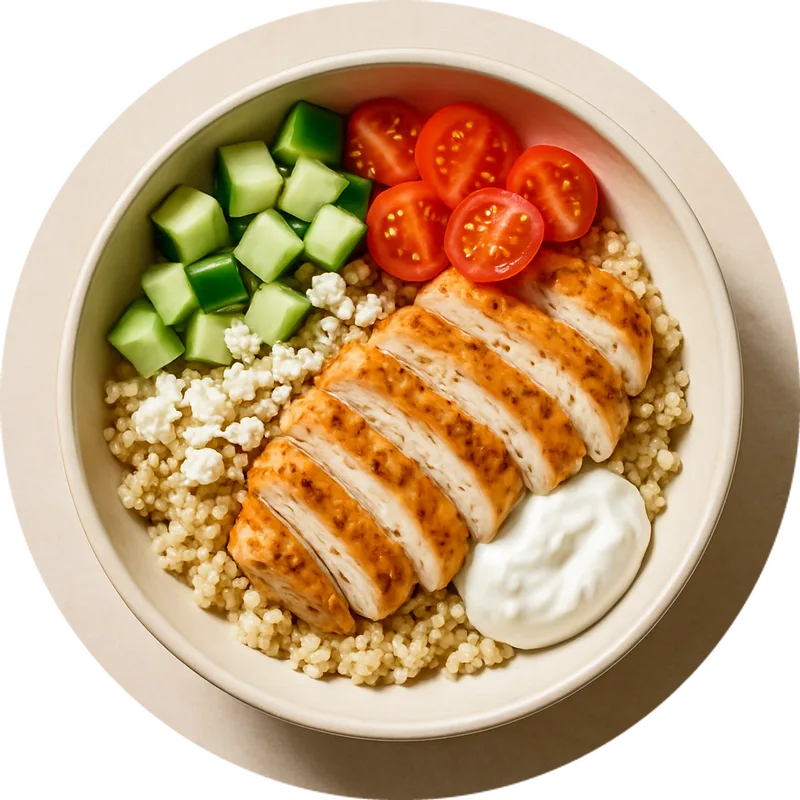
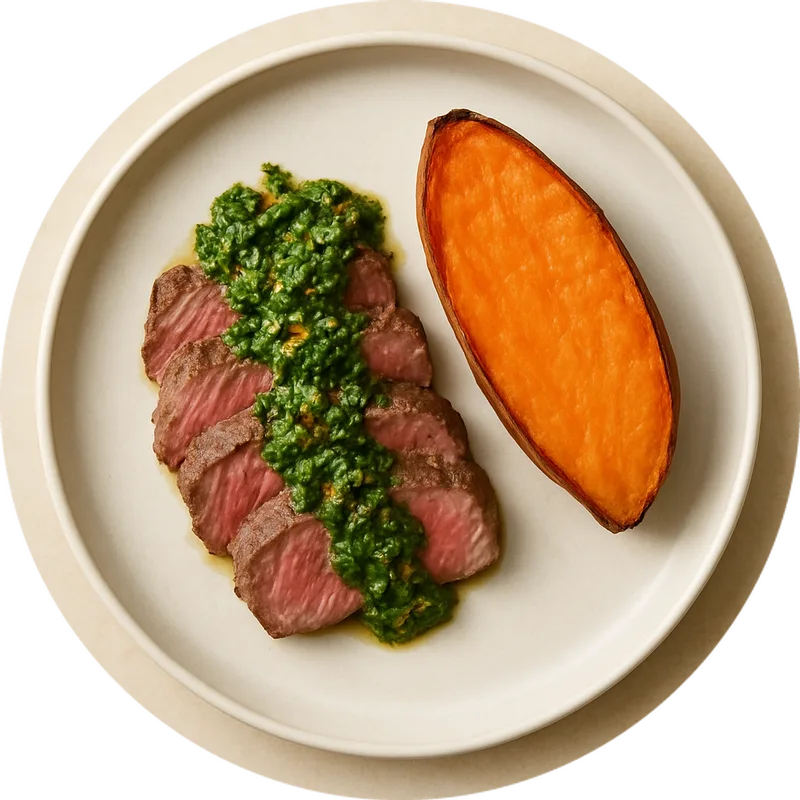
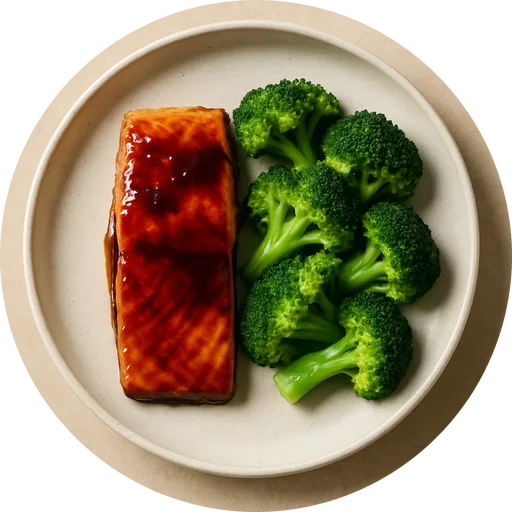
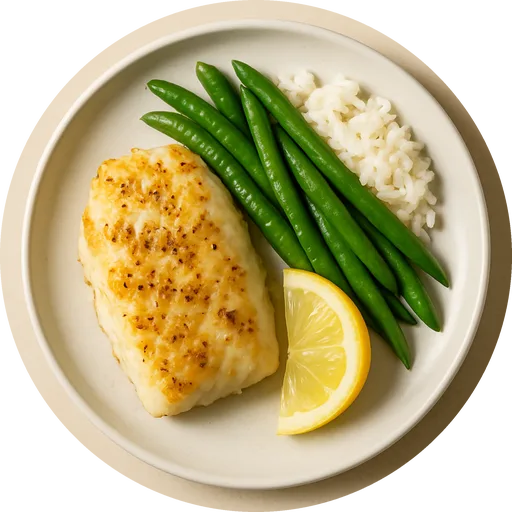
High-protein plates from the free Post Dose recipe library (34 to 46 grams of protein each):


What did the body scan studies find about muscle?
Two sources looked at what the lost weight was made of.
In a SURMOUNT-1 body scan group, 160 people (124 on tirzepatide, 36 on placebo) had DXA scans at the start and at week 72. On tirzepatide, body weight fell 21.3%, fat mass fell 33.9% and lean mass fell 10.9%. On placebo, they fell 5.3%, 8.2% and 2.6%. About 75% of the weight lost was fat and 25% was lean mass, in both groups.11
A 2025 review pooled 22 randomized trials of GLP-1 medicines and similar drugs (2,258 people) and also found that lean mass made up about 25% of the weight lost. Tirzepatide and semaglutide gave the biggest weight and fat loss but were among the least effective at keeping lean mass. The review found no significant effect on relative lean mass, the percent change from baseline.12
Lean mass includes muscle but is not the same thing as muscle, and the scans did not measure strength. Neither source tested whether more protein or lifting weights changes these numbers. For more, read GLP-1 and muscle loss.
How many people were in these trials?
Across the 10 trials, 9,953 people were randomized. Here is the math, from each abstract:
STEP: 1,961 + 1,210 + 611 + 803 + 304 + 338 = 5,227.
SURMOUNT: 2,539 + 938 + 579 + 670 = 4,726.
Together: 5,227 + 4,726 = 9,953, or nearly 10,000.
Three cautions. The count is people randomized, not people who finished, though most finished: 92.8% in STEP 3 and 94.4% in STEP 8.3, 6 Many were in placebo groups. And STEP 4, SURMOUNT-3 and SURMOUNT-4 randomized people only after a run-in, so more people took part in them than the table counts.
The bottom line
In the seven trials that began treatment from the start, the semaglutide and tirzepatide groups changed by -9.6% to -20.9%, compared with -1.9% to -5.7% on placebo. Weight came back when people switched to placebo. Most of the trials paired the medicine with diet and activity support, and none tested which foods matter most. For the food side, start with the protein guide.
Questions people ask
How many people were in the STEP and SURMOUNT trials?
The six STEP trials in this guide randomized 5,227 adults. The four SURMOUNT trials randomized 4,726, for 9,953 in all. Those counts are people randomized, meaning assigned to a group by chance, and many of them were in placebo groups.
What is the difference between STEP and SURMOUNT?
STEP is the research program for semaglutide (Wegovy). SURMOUNT is the program for tirzepatide (Zepbound). None of the 10 trials compared the two medicines with each other, so the numbers should not be lined up like a scoreboard. The trials enrolled different people and ran for different lengths of time.
Do people regain weight after they stop a GLP-1?
In STEP 4 and SURMOUNT-4, people who switched from the medicine to placebo regained weight over the next 48 to 52 weeks. The average change was +6.9% in STEP 4 and +14.0% in SURMOUNT-4, while those who kept taking the medicine lost more. These are group averages from about one year, so they cannot predict what will happen to one person. Decisions about stopping belong to you and your prescriber.
Did these trials test any diet?
Not head to head. STEP 3 and SURMOUNT-3 built in calorie targets, dietitian visits and activity goals, and in STEP 3 the placebo group still lost 5.7% with that support. But none of the 10 trials compared one way of eating against another, so they cannot say which foods work best.
Do these trials show that GLP-1 medicines cause muscle loss?
They show that part of the weight lost is lean mass. In a body scan group from SURMOUNT-1, about 75% of the weight lost was fat and about 25% was lean mass, and the placebo group showed the same split. Lean mass includes muscle but is not the same thing as muscle, so ask your care team how to protect your strength.
Sources
- Wilding JPH, et al. Once-weekly semaglutide in adults with overweight or obesity (STEP 1). New England Journal of Medicine, 2021. doi.org/10.1056/NEJMoa2032183
- Davies M, et al. Semaglutide 2.4 mg once a week in adults with overweight or obesity, and type 2 diabetes (STEP 2): a randomised, double-blind, double-dummy, placebo-controlled, phase 3 trial. The Lancet, 2021. doi.org/10.1016/S0140-6736(21)00213-0
- Wadden TA, et al. Effect of subcutaneous semaglutide vs placebo as an adjunct to intensive behavioral therapy on body weight in adults with overweight or obesity (STEP 3). JAMA, 2021. doi.org/10.1001/jama.2021.1831
- Rubino D, et al. Effect of continued weekly subcutaneous semaglutide vs placebo on weight loss maintenance in adults with overweight or obesity (STEP 4). JAMA, 2021. doi.org/10.1001/jama.2021.3224
- Garvey WT, et al. Two-year effects of semaglutide in adults with overweight or obesity: the STEP 5 trial. Nature Medicine, 2022. doi.org/10.1038/s41591-022-02026-4
- Rubino DM, et al. Effect of weekly subcutaneous semaglutide vs daily liraglutide on body weight in adults with overweight or obesity without diabetes (STEP 8). JAMA, 2022. doi.org/10.1001/jama.2021.23619
- Jastreboff AM, et al. Tirzepatide once weekly for the treatment of obesity (SURMOUNT-1). New England Journal of Medicine, 2022. doi.org/10.1056/NEJMoa2206038
- Garvey WT, et al. Tirzepatide once weekly for the treatment of obesity in people with type 2 diabetes (SURMOUNT-2): a double-blind, randomised, multicentre, placebo-controlled, phase 3 trial. The Lancet, 2023. doi.org/10.1016/S0140-6736(23)01200-X
- Wadden TA, et al. Tirzepatide after intensive lifestyle intervention in adults with overweight or obesity: the SURMOUNT-3 phase 3 trial. Nature Medicine, 2023. doi.org/10.1038/s41591-023-02597-w
- Aronne LJ, et al. Continued treatment with tirzepatide for maintenance of weight reduction in adults with obesity (SURMOUNT-4). JAMA, 2024. doi.org/10.1001/jama.2023.24945
- Look M, et al. Body composition changes during weight reduction with tirzepatide in the SURMOUNT-1 study. Diabetes, Obesity and Metabolism, 2025. doi.org/10.1111/dom.16275
- Karakasis P, et al. Effect of GLP-1 receptor agonists and co-agonists on body composition: systematic review and network meta-analysis. Metabolism, 2025. doi.org/10.1016/j.metabol.2024.156113
- Mozaffarian D, et al. Nutritional priorities to support GLP-1 therapy for obesity: a joint advisory from the American College of Lifestyle Medicine, the American Society for Nutrition, the Obesity Medicine Association and The Obesity Society. Obesity, 2025. doi.org/10.1002/oby.24336
Post Dose is a meal planner, not medical advice. Your prescriber sets your dose and your plan. Talk to them or a registered dietitian before you change how you eat.