Not hungry on a GLP-1? What to eat when nothing sounds good
The short answer
GLP-1 medicines turn appetite down and slow how fast the stomach empties, so food often stops sounding good.23 Eating very little still has costs, and experts say daily protein should not fall below 0.4 to 0.5 grams per kilogram.1 Instead of waiting for hunger, eat a small breakfast, then small meals every 3 to 4 hours, using cold, soft or drinkable protein like yogurt, cottage cheese, kefir and soup.1
Why does nothing sound good on a GLP-1?
These medicines turn appetite down on purpose. The Wegovy and Zepbound labels both say the medicine decreases calorie intake, and that the effect is likely from changing appetite.23 The receptors they act on sit in parts of the brain that help regulate appetite.23
Both labels also say the medicine delays gastric emptying, so food leaves your stomach more slowly. For tirzepatide, the delay is largest after the first dose and fades over time.3 A slower stomach is one reason you can feel full, bloated or queasy.1
A 2025 joint advisory from four obesity and nutrition societies says GLP-1s reduce energy intake by 16% to 39% compared with placebo.1 Some people also develop food aversions, usually when they start or when the dose goes up.1 So "nothing sounds good" is a normal effect of the medicine, not a personal failing. If your worst days line up with your shot, see what to eat on shot day.
Is it okay to eat very little when the food noise goes quiet?
For many people, a quiet mind around food is the best part. The advisory describes less food preoccupation, or "food noise," along with fewer cravings and less emotional eating.1 The catch is that your body still needs protein and nutrients, even when you feel no pull toward food. The advisory names two costs of eating too little.
Muscle. Fast weight loss on a GLP-1 frequently takes muscle along with fat. In the STEP 1 trial, 62% of the weight lost was fat and 38% was lean body mass, which includes muscle and other nonfat tissue.1 The advisory says adult protein intake should not fall below 0.4 to 0.5 grams per kilogram of body weight a day, because that can lead to muscle atrophy and functional impairments.1 For someone who weighs 68 kg (150 lb), that works out to about 27 to 34 grams. It is a floor, not a goal. For active weight loss the advisory gives a higher range: 1.2 to 1.6 grams per kilogram, or 80 to 120 grams a day.1 More in how much protein you need on a GLP-1.
Vitamins and minerals. A big drop in eating can leave you short on vitamins and minerals, the advisory warns, especially below about 1,200 calories a day for females and 1,800 for males.1 It lists iron, calcium, magnesium, zinc and several vitamins, including D and B12, as ones to watch. Signs include fatigue beyond what you expect, a lot of hair loss and muscle weakness.1 Supplements can be considered, it says, so ask your prescriber or a registered dietitian what fits you.
Should I wait until I am hungry to eat?
If hunger rarely shows up, waiting for it can mean many hours with nothing. The advisory notes that low interest in food and a full feeling can leave people going several hours without eating. For some that means too few nutrients. For others it means a rebound pull toward sugar and refined carbohydrates once they finally get very hungry.1
Its suggestion is a schedule: a small breakfast, then small meals every 3 to 4 hours, while drinking enough fluids.1 Nausea often shows up in the morning or after a long stretch without food, and some people get stuck in a cycle where nausea makes them skip meals, which makes the nausea worse. Large meals make vomiting more likely, so small is the goal.1
A phone reminder helps. So does tying a few bites to something you already do, like your morning coffee. A small meal can be a half portion. Ginger or peppermint tea may ease queasiness, the advisory says.1
What should I eat when nothing sounds good?
Choose foods that pack a lot of protein into a few bites. The advisory suggests lower-volume, nutrient-dense protein foods such as fish, eggs, Greek yogurt, cottage cheese, and nuts and seeds, including spreads like peanut butter.1 Protein tends to slip first. In a small 2025 conference abstract of 60 adults on GLP-1 medicines, 26 people (43%) ate at least 1.2 grams per kilogram a day.4
Plain-food numbers below are USDA FoodData Central values, rounded.5 Brands differ, so check your label. The first three rows are full recipe servings.
| Food | Serving | About how much protein |
|---|---|---|
| Vanilla-Berry Protein Smoothie | 1 serving | 37 g |
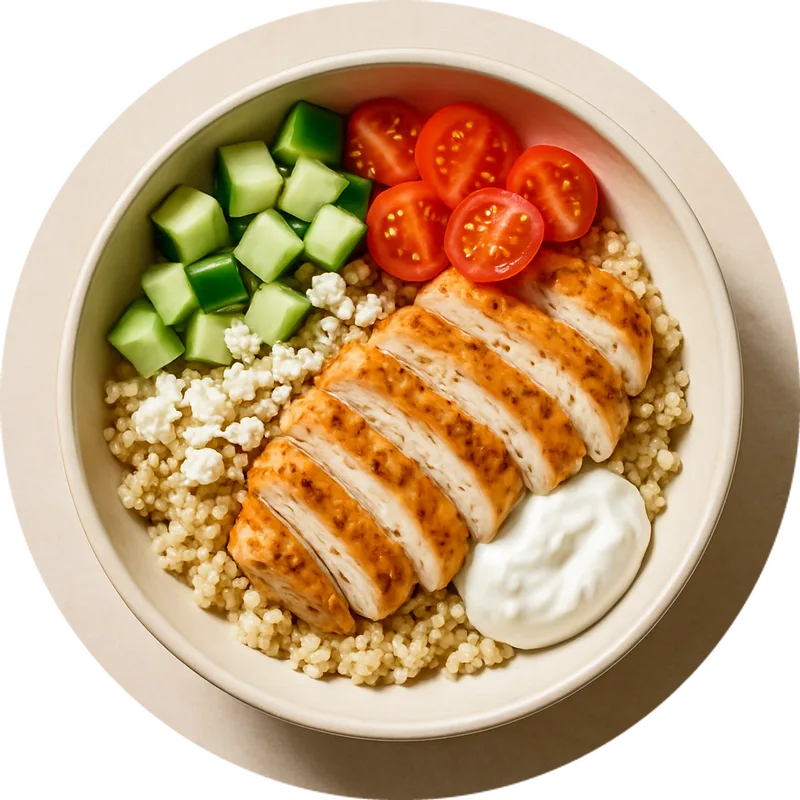
| White Bean & Rosemary Chicken Soup | 1 serving | 44 g |
| Greek Yogurt, Banana & Peanut Butter Bowl | 1 serving | 36 g |
| Greek yogurt, plain, lowfat | 7 oz container | 20 g |
| Cottage cheese, lowfat | 1/2 cup | 12 g |
| Canned white tuna in water | 3 oz, drained | 20 g |
| Roasted chicken breast | 3 oz | 26 g |
| Edamame, shelled | 1 cup | 18 g |
| Kefir, plain, lowfat | 1 cup | 9 g |
| String cheese (part-skim mozzarella) | 1 oz | 7 g |
| Peanut butter | 2 tbsp | 7 g |
| Hard-boiled egg | 1 large | 6 g |
A 7 oz yogurt, two hard-boiled eggs and half a cup of cottage cheese come to about 44 grams, and none of it needs a stove.
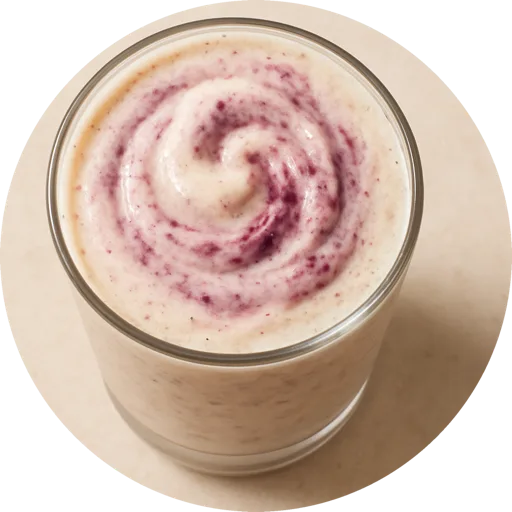
Vanilla-Berry Protein Smoothie
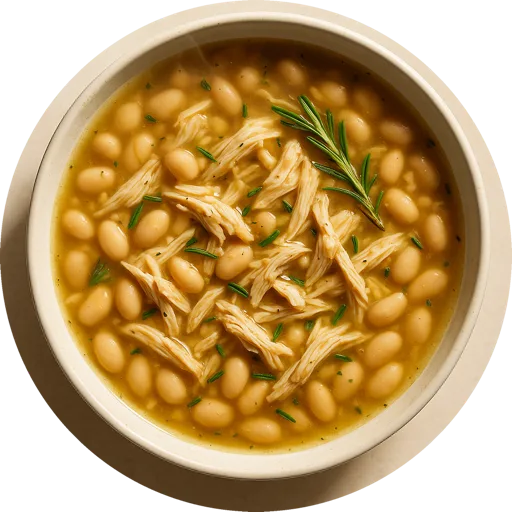
White Bean & Rosemary Chicken Soup
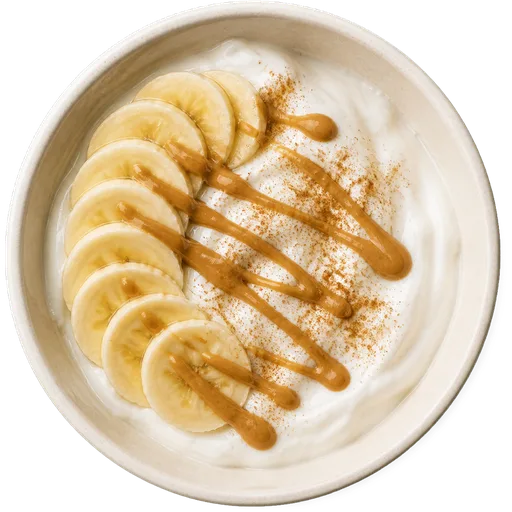
Greek Yogurt, Banana & Peanut Butter Bowl
Are drinks, soups and cold foods easier when I am not hungry?
For many people, yes. Liquids and soft foods take less effort than a full plate, and the advisory notes that foods that flow easily and are higher in water can move through the stomach faster.1 Think kefir, milk, smoothies, broth-based soups and yogurt.
For nausea, the National Cancer Institute's tips, written for people in cancer care, suggest cold foods such as yogurt and say to avoid strong food odors like coffee, fish, onions and garlic.6
Some people reach their protein target with high-protein shakes, the advisory says.1 Use them to fill gaps, and check the sugar on the label, since the advisory also recommends a variety of nutrient-dense foods and limiting sugar-sweetened drinks.1 Foods high in protein or fat also slow stomach emptying, which can worsen constipation, so tell your care team if that happens.1
What does a small-appetite day look like?
Here is one day built from Post Dose recipes, eaten in small pieces about every three hours. Each stop is a whole or half serving.
- Morning: Vanilla-Berry Protein Smoothie, whole serving, 37 g
- Late morning: White Bean & Rosemary Chicken Soup, half serving, 22 g
- Early afternoon: Cottage Cheese Bowl & Warm Peaches, half serving, 17 g
- Mid-afternoon: Greek Yogurt, Banana & Peanut Butter Bowl, half serving, 18 g
- Evening: Chicken Tortilla Soup, half serving, 22 g
That adds up to 116 grams of protein and about 1,060 calories, inside the 80 to 120 gram range the advisory gives.1 Swap any half for a whole serving if you have room.
This is a small day on purpose, and an example, not a calorie target. Your prescriber or a registered dietitian is the right person to set your numbers. If most of your days look like this or smaller, tell them, since vitamin and mineral gaps get more likely at low intakes.1
When should I call my prescriber?
A small appetite is expected on these medicines. These signs are different, and they are worth a call:
- You cannot keep food or fluids down, or nausea, vomiting or diarrhea will not go away. Both labels say to tell your healthcare provider right away about symptoms that do not go away, since losing fluids can lead to dehydration and kidney problems.23
- You feel dizzy, faint or weak, or your heart pounds. Dizziness is a listed side effect on both labels,23 and the advisory links dehydration to kidney injury and heart palpitations.1
- You have severe belly pain that will not go away, with or without vomiting. The labels say to call right away.23
- Your weight is dropping faster than feels right to you, or you notice signs of low nutrients, like unusual tiredness or muscle weakness.1
- Food has lost its joy or eating feels stressful. Some people do better with a change in dose or medicine, or with support from a therapist or dietitian, the advisory says.1
If something feels like an emergency, get urgent medical care.
The bottom line
A quiet appetite is the medicine doing its job, but your body still needs fuel and protein. Eat on a schedule instead of waiting for hunger, start with small foods that carry a lot of protein, and lean on cold, soft and drinkable options on hard days. Check your range with the protein calculator, then talk to your prescriber or a registered dietitian about anything that worries you. Post Dose is an iPhone meal planner built for people on GLP-1 medicines.
Questions people ask
Is it normal to have no appetite on a GLP-1?
How little protein is too little on a GLP-1?
The 2025 advisory says adult protein intake should not fall below 0.4 to 0.5 grams per kilogram a day, since that can lead to muscle atrophy and functional impairments.1 That is a floor, not a goal. The targets it gives for active weight loss are higher: 1.2 to 1.6 grams per kilogram, or 80 to 120 grams a day. If you are far below your target most days, tell your prescriber or a registered dietitian.
What can I eat if I can only manage a few bites?
Pick foods that carry a lot of protein in a small amount. The advisory names fish, eggs, Greek yogurt, cottage cheese, and nuts and seeds with their spreads, such as peanut butter.1 A 7 oz container of plain lowfat Greek yogurt has about 20 grams of protein, and half a cup of lowfat cottage cheese has about 12.5 Half a serving still counts.
Do protein shakes count when I am not hungry?
They can help. The advisory says some people meet their protein targets with high-protein shakes, and that a care plan can include protein supplements as needed.1 It also recommends a variety of nutrient-dense whole foods and limiting sugar-sweetened drinks, so check the sugar on the label.
How often should I eat if I am never hungry?
Sources
- Mozaffarian D, et al. Nutritional priorities to support GLP-1 therapy for obesity: a joint advisory from the American College of Lifestyle Medicine, the American Society for Nutrition, the Obesity Medicine Association and The Obesity Society. Obesity, 2025. doi.org/10.1002/oby.24336
- Wegovy (semaglutide) prescribing information, sections 12.1 and 12.2. Novo Nordisk, via DailyMed (U.S. National Library of Medicine), label version published June 30, 2026. dailymed.nlm.nih.gov/dailymed/lookup.cfm?setid=ee06186f-2aa3-4990-a760-757579d8f77b
- Zepbound (tirzepatide) prescribing information, sections 5 and 12. Eli Lilly, via DailyMed (U.S. National Library of Medicine), label version published September 2, 2026. dailymed.nlm.nih.gov/dailymed/lookup.cfm?setid=487cd7e7-434c-4925-99fa-aa80b1cc776b
- Johnson B, et al. Suboptimal protein intake for hypocaloric diet needs while using glucagon-like peptide-1 receptor agonists (conference abstract, 60 adults). Journal of the International Society of Sports Nutrition, 2025. doi.org/10.1080/15502783.2025.2550139
- U.S. Department of Agriculture, FoodData Central (SR Legacy entries): Yogurt, Greek, plain, lowfat (170903); Cheese, cottage, lowfat, 2% milkfat (172182); Fish, tuna, white, canned in water, drained solids (175158); Chicken, broilers or fryers, breast, meat only, cooked, roasted (171477); Edamame, frozen, prepared (168411); Kefir, lowfat, plain (170904); Cheese, mozzarella, part skim milk (170847); Peanut butter, smooth style, without salt (172470); Egg, whole, cooked, hard-boiled (173424). fdc.nal.usda.gov/
- National Cancer Institute. Nausea and Vomiting and Cancer: Side Effects (tips for managing nausea and vomiting, page updated May 9, 2025). www.cancer.gov/about-cancer/treatment/side-effects/nausea-vomiting
Post Dose is a meal planner, not medical advice. Your prescriber sets your dose and your plan. Talk to them or a registered dietitian before you change how you eat.