What to eat on Zepbound: foods, protein and a sample day
The short answer
The Zepbound label says to take it once a week, at any time of day, with or without meals, along with a reduced-calorie diet and more physical activity.1 Day to day, eat small, regular meals, put protein first, pick mild, lower-fat foods when your stomach is off, and keep sipping fluids.56 Nausea tops the label's side effect table.1 Follow your prescriber and your Medication Guide.
What should I eat on Zepbound?
On Zepbound, eat small, regular meals built on protein, keep them mild and lower in fat when your stomach is off, and drink fluids all day.56 The Zepbound label has no special food rule at the shot. Its prescribing information says: "Administer ZEPBOUND once weekly at any time of day, with or without meals."1 The Medication Guide says it plainly: "ZEPBOUND may be taken with or without food."1
What you eat still matters. The label pairs Zepbound with a reduced-calorie diet and more physical activity.1 It also says tirzepatide lowers calorie intake, likely through appetite, and slows how fast the stomach empties, most after the first dose.1 Our guide to what to eat on a GLP-1 covers the basics for every GLP-1.
What is Zepbound, according to its label?
These facts come straight from the Zepbound prescribing information and Medication Guide.1
- Medicine: tirzepatide. The label calls it a GIP receptor and GLP-1 receptor agonist.
- Maker: Eli Lilly and Company.
- How often: an injection under the skin once a week, at any time of day.
- Approved for: "in combination with a reduced-calorie diet and increased physical activity: to reduce excess body weight and maintain weight reduction long term in adults with obesity or adults with overweight in the presence of at least one weight-related comorbid condition" and "to treat moderate to severe obstructive sleep apnea (OSA) in adults with obesity."
What stomach side effects does the Zepbound label list?
The Zepbound label lists nausea, diarrhea, vomiting and constipation as its most common stomach side effects, ahead of placebo at every dose.1 The numbers below are the stomach rows of the label's Table 1, which pools two placebo-controlled weight trials (Study 1 and Study 2) of adults with obesity or overweight, treated for up to 72 weeks, at the three doses the table reports.1
| Side effect (label's term) | Placebo (958 people) | Zepbound 5 mg (630 people) | Zepbound 10 mg (948 people) | Zepbound 15 mg (941 people) |
|---|---|---|---|---|
| Nausea | 8% | 25% | 29% | 28% |
| Diarrhea | 8% | 19% | 21% | 23% |
| Vomiting | 2% | 8% | 11% | 13% |
| Constipation | 5% | 17% | 14% | 11% |
| Abdominal pain | 5% | 9% | 9% | 10% |
| Dyspepsia (indigestion) | 4% | 9% | 9% | 10% |
| Eructation (burping) | 1% | 4% | 5% | 5% |
| Gastroesophageal reflux disease | 2% | 4% | 4% | 5% |
| Flatulence (gas) | 2% | 3% | 3% | 4% |
| Abdominal distension (bloating) | 2% | 3% | 3% | 4% |
Source: Zepbound prescribing information, Table 1.1 In the same two trials, any stomach side effect was reported by 56% of people at each Zepbound dose, versus 30% on placebo.1 The label says: "The majority of nausea, vomiting, and/or diarrhea events occurred during dose escalation and decreased over time."1 Questions about your dose belong with your prescriber.
What should I eat on Zepbound to avoid nausea?
To ease nausea on Zepbound, eat small meals often, skip big or greasy ones, and choose soft foods that go down easily. A 2025 joint advisory from four obesity and nutrition societies says nausea often shows up in the morning or after a long time without eating.5 It suggests a small breakfast, then more small meals every 3 to 4 hours, with enough fluids.5
- Avoid large or high-fat meals. The advisory says this can help, and AACE says to avoid high-fat or known trigger foods.56 See foods to avoid on a GLP-1.
- Eat slowly. AACE suggests eating slowly and mindfully, with smaller portions.6
- Pick foods that flow easily. The advisory says foods that flow easily and hold a lot of water can help.5 Soups and smoothies fit.
- Try ginger or peppermint tea. The advisory says these may help.5
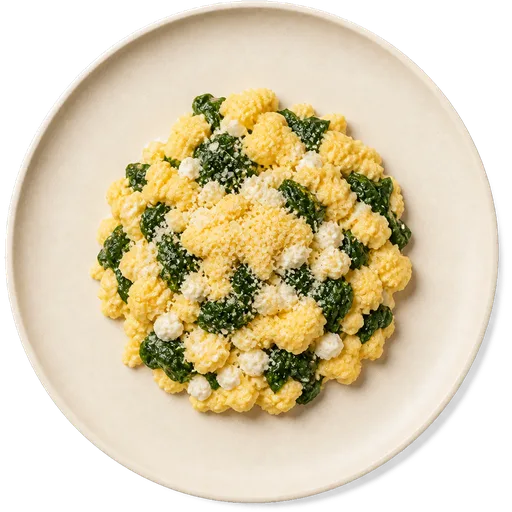
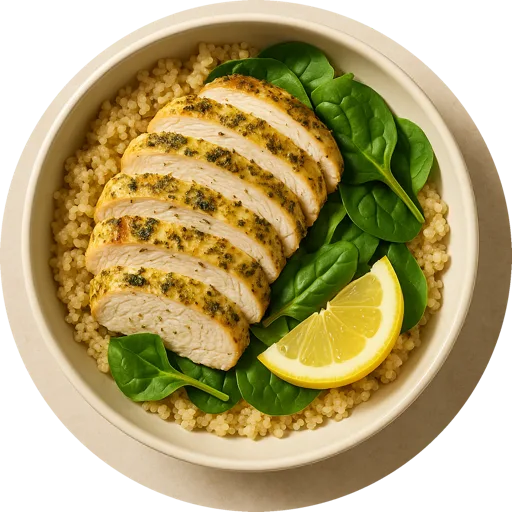
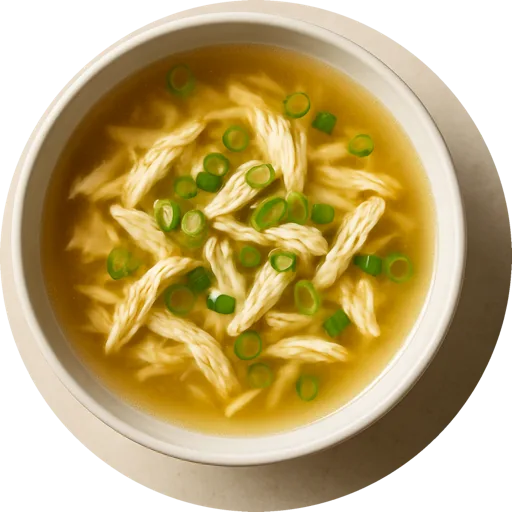
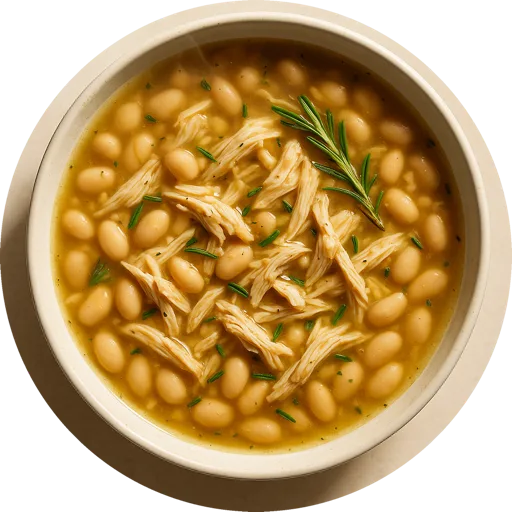
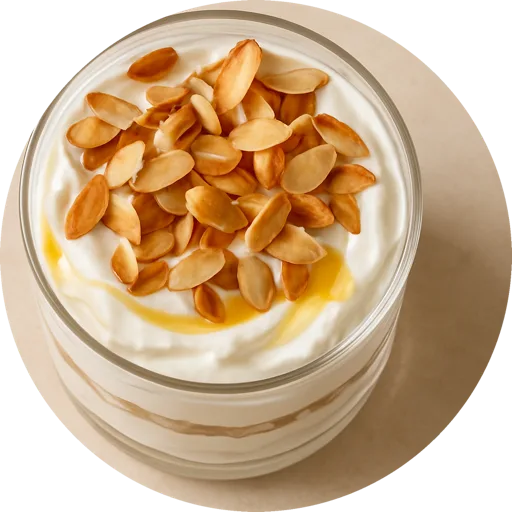
Three gentle, low-fat plates from our recipes are below. For the shot day itself, read what to eat on shot day.
What do I eat on Zepbound when I am not hungry?
When you are not hungry on Zepbound, eat small amounts on a schedule anyway, and start with the protein. AACE says to keep structured mealtimes even without hunger cues, and to shift to 4 to 5 smaller meals a day when you fill up fast.6 The 2025 advisory warns that some people get caught in a cycle where nausea stops them eating, and not eating makes the nausea worse.5
Greek yogurt, cottage cheese, half a bowl of soup or a protein smoothie all count. Our Vanilla-Berry Protein Smoothie has 37 g of protein. AACE also says to avoid drinking a lot with meals when you fill up early, so sip between meals.6 More ideas: no appetite on a GLP-1.
How much protein do I need on Zepbound?
A 2025 joint advisory from four obesity and nutrition societies says targets of 1.2 to 1.6 grams of protein per kilogram a day have been proposed during active weight loss.5 It also offers a simpler target of 80 to 120 grams a day.5 The American Association of Clinical Endocrinology gives 1.2 to 1.5 grams per kilogram a day.6
Neither source gives Zepbound its own number. The advisory also says protein-rich foods can be eaten first in a meal, so you get enough before you fill up.5 Our protein guide shows how to find your number.
What does a day of eating on Zepbound look like?
Here is one sample day built from Post Dose recipes marked gentle, each low in fat. The protein and fat numbers come from each recipe's own nutrition, and the total was added up by a script from those numbers.
| Meal | Recipe | Portion | Protein | Fat |
|---|---|---|---|---|
| Breakfast | Vanilla-Berry Protein Smoothie | 1 serving | 37 g | 6 g |
| Lunch | Greek Chicken Bowl | Half a serving | 24 g | 7.5 g |
| Dinner | Lemon Chicken Orzo Soup | 1 serving | 49 g | 6 g |
| Day total | 110 g | 19.5 g |
That lands inside the advisory's 80 to 120 g range.5 For a full week, see our 7-day GLP-1 meal plan. Eating at a restaurant? Read eating out on a GLP-1.
Can an app plan my meals on Zepbound?
Post Dose is an iPhone meal planner, and Zepbound is one of the medicines you can pick in setup. It plans meals around your shot week, with gentler meals on the days right after the shot, and sets a daily protein target from your goal weight. It never comments on a medicine or a dose.
Is eating on Zepbound different from Mounjaro, Wegovy or Ozempic?
Eating on Zepbound is not different by label: all four weekly shots say they can be taken with or without meals.1234 Zepbound and Mounjaro are the same medicine, tirzepatide, from the same maker, sold under two names with different approved uses.12 Wegovy and Ozempic contain a different medicine, semaglutide.34
| Zepbound | Mounjaro | Wegovy shot | Ozempic | |
|---|---|---|---|---|
| Medicine | Tirzepatide1 | Tirzepatide2 | Semaglutide3 | Semaglutide4 |
| Maker | Eli Lilly1 | Eli Lilly2 | Novo Nordisk3 | Novo Nordisk4 |
| How often | Once a week, any time of day1 | Once a week, any time of day2 | Once a week, same day each week, any time of day3 | Once a week, same day each week, any time of day4 |
| Food rule on the label | With or without meals1 | With or without meals2 | With or without meals3 | With or without meals4 |
| Approved uses (short) | Weight loss in certain adults; sleep apnea in adults with obesity1 | Type 2 diabetes; heart risk in type 2 diabetes2 | Heart risk; weight loss; a liver disease called MASH3 | Type 2 diabetes; heart and kidney risks in type 2 diabetes4 |
The 2025 advisory gives one set of nutrition advice for GLP-1 medicines in general, so the food ideas on this page apply across all four.5 If you are new to any of them, our first week on a GLP-1 guide walks through the start.
When should I call my prescriber?
Call your prescriber for any of these warning signs from the Zepbound Medication Guide:1
- Stomach problems that are severe or will not go away.
- Nausea, vomiting or diarrhea that does not go away. These can cause dehydration that may lead to kidney problems. Tell your healthcare provider right away. The guide says drinking fluids helps lower the chance of dehydration.
- Severe stomach pain that will not go away, with or without nausea or vomiting, sometimes felt from the belly to the back. This can be pancreatitis: the guide says to stop using Zepbound and call your healthcare provider right away.
- Gallbladder signs: pain in the upper stomach, fever, yellow skin or eyes, or clay-colored stools. Tell your provider right away.
- A serious allergic reaction: swelling of the face, lips, tongue or throat, trouble breathing or swallowing, severe rash or itching, fainting, or a very rapid heartbeat. Get medical help right away.
- A lump or swelling in your neck, hoarseness, trouble swallowing or shortness of breath.
- Low blood sugar signs if you also take insulin or a sulfonylurea, such as dizziness, sweating or shakiness.
Also tell every healthcare provider you take Zepbound before any surgery or procedure that uses anesthesia or deep sedation.1
The bottom line
The Zepbound label says it can be taken with or without meals.1 Nausea leads its side effect table. Eat small, protein-first meals, keep them mild and lower in fat, and sip fluids all day.56 This page is general information, not medical advice, so talk to your prescriber or a dietitian about your own plan.
Questions people ask
Do I have to eat at a certain time with Zepbound?
No. The Zepbound prescribing information says to take it once weekly at any time of day, with or without meals, and the Medication Guide says it may be taken with or without food. The label also says to use it with a reduced-calorie diet and more physical activity. Follow your prescriber and your Medication Guide.
How common is nausea on Zepbound?
In Table 1 of the Zepbound label, from two placebo-controlled weight trials, nausea was reported by 25% of people on 5 mg, 29% on 10 mg and 28% on 15 mg, versus 8% on placebo. The label says most nausea, vomiting and diarrhea happened while the dose was being raised and decreased over time.
What should I eat on Zepbound to avoid nausea?
Eat small meals every 3 to 4 hours, starting with a small breakfast, and skip large or high-fat meals, as a 2025 joint advisory on GLP-1 nutrition suggests. Soups and other foods that flow easily and hold a lot of water can help. Ginger or peppermint tea may help too.
How much protein do I need on Zepbound?
A 2025 joint advisory from four obesity and nutrition societies says targets of 1.2 to 1.6 grams of protein per kilogram a day have been proposed during active weight loss, and offers a simpler target of 80 to 120 grams a day. AACE gives 1.2 to 1.5 grams per kilogram a day.
Is Zepbound the same as Mounjaro?
Both contain tirzepatide and both are made by Eli Lilly. Their labels list different uses. Zepbound is approved for weight loss and keeping it off in certain adults, and for moderate to severe obstructive sleep apnea in adults with obesity. Mounjaro is approved for type 2 diabetes. Both labels say with or without meals.
Sources
- ZEPBOUND (tirzepatide) injection, prescribing information and Medication Guide. Eli Lilly and Company, revised August 2026. DailyMed, U.S. National Library of Medicine (opened November 22, 2026). dailymed.nlm.nih.gov/dailymed/drugInfo.cfm?setid=487cd7e7-434c-4925-99fa-aa80b1cc776b
- MOUNJARO (tirzepatide) injection, prescribing information and Medication Guide. Eli Lilly and Company, revised August 2026. DailyMed (opened November 22, 2026). dailymed.nlm.nih.gov/dailymed/drugInfo.cfm?setid=d2d7da5d-ad07-4228-955f-cf7e355c8cc0
- WEGOVY (semaglutide) injection and tablets, prescribing information. Novo Nordisk, revised June 2026. DailyMed (opened November 22, 2026). dailymed.nlm.nih.gov/dailymed/drugInfo.cfm?setid=ee06186f-2aa3-4990-a760-757579d8f77b
- OZEMPIC (semaglutide) injection, prescribing information. Novo Nordisk, revised May 2026. DailyMed (opened November 22, 2026). dailymed.nlm.nih.gov/dailymed/drugInfo.cfm?setid=adec4fd2-6858-4c99-91d4-531f5f2a2d79
- Mozaffarian D, et al. Nutritional priorities to support GLP-1 therapy for obesity: a joint advisory from the American College of Lifestyle Medicine, the American Society for Nutrition, the Obesity Medicine Association and The Obesity Society. Obesity, 2025 (full text read on PMC, PMC12304835). doi.org/10.1002/oby.24336
- American Association of Clinical Endocrinology. Nutritional Considerations for Patients on Obesity Medications. Opened November 22, 2026. pro.aace.com/nutritional-considerations-for-patients-on-obesity-medications
Post Dose is a meal planner, not medical advice. Your prescriber sets your dose and your plan. Talk to them or a registered dietitian before you change how you eat.